Written November 30, 2025; Visited October 21 – 23, 2025
I AM going to finish posting about our Europe 2025 trip. But first, I hope those of you who celebrate Thanksgiving had a wonderful gathering with your family or friends and toasted to all you are thankful for. We definitely did.
Back to Madrid
After a wonderful time in Basque Country, we headed back to Madrid. Leesa and Mark had just one day left but we planned several as we had more to see.
The Palace
I have to admit, I was torn on whether to visit the Palace, but it had great reviews and the new museum of the royal collections was said to be really good. I‘m very glad we went.
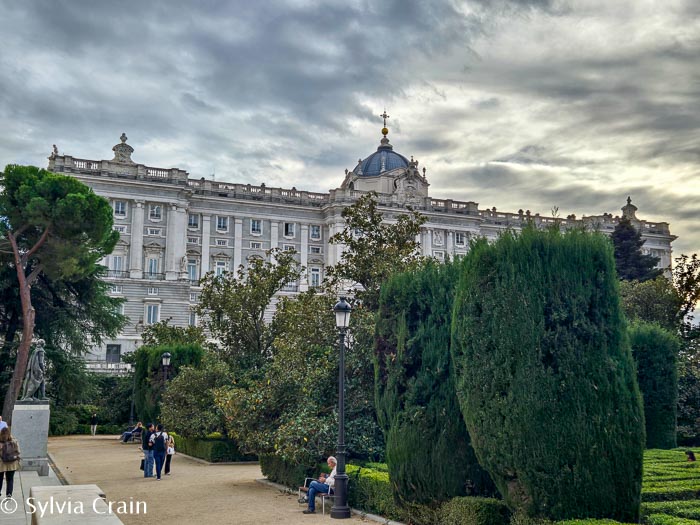
I’ve not visited many current palaces so don’t have a good feel for how the “other half” (half?) live. Of course the family does not live there most of the time, but seeing the opulence, the wealth required (it’s now owned by the Spanish state but obviously most of the creation happened under royal funding) and the size (the largest in Europe) was quite impressive.
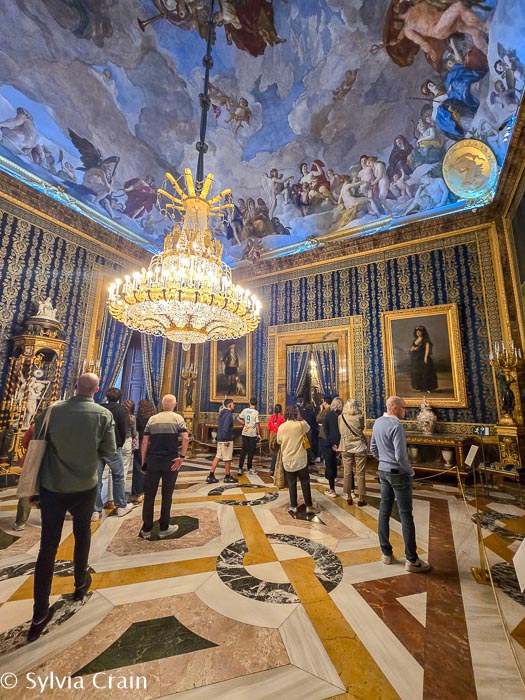

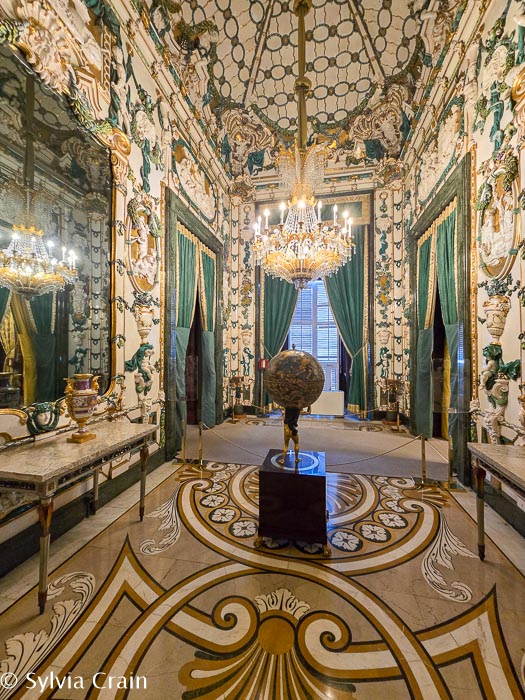

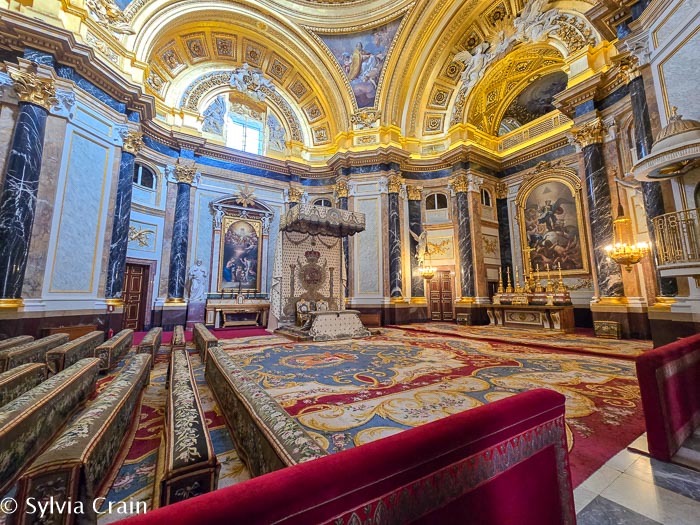

There were separate tours to the kitchen (I thought I had that ticket but did not, darn!), to the stables, amory and a few other places. It was easy to wanter for several hours.
Galeria de las Coleciones Reales
I have to admit my ignorance of Spanish history beyond Isabella and Ferdinand and the Conquistadors who conquered the Americas. I learned this as part of New Mexico history as a child. I should have realized that the money flowing in from the Spanish conquests of the Americas were making these rulers incredibly rich, but I’d never thought about it.
Interestingly, may of the Spanish rulers were quite interested in art, had the money, and married back and forth with the Hapsburgs and Burbons so amassed one of the premier collections of art in the world. The collection was diversified as marriages were forged with the French, British, Hungarian and Germans as well as the Hapsburg rule over the Low Country (i.e., Netherlands, Belgum, etc.) and the importation of artists from Italy during the Spanish Renaissance. Side bar: Catherine of Aragon who was Herny VIII’s 1st wife was the daughter of Isabel and Ferdinand. Such a tight knit community! But, to the collection.
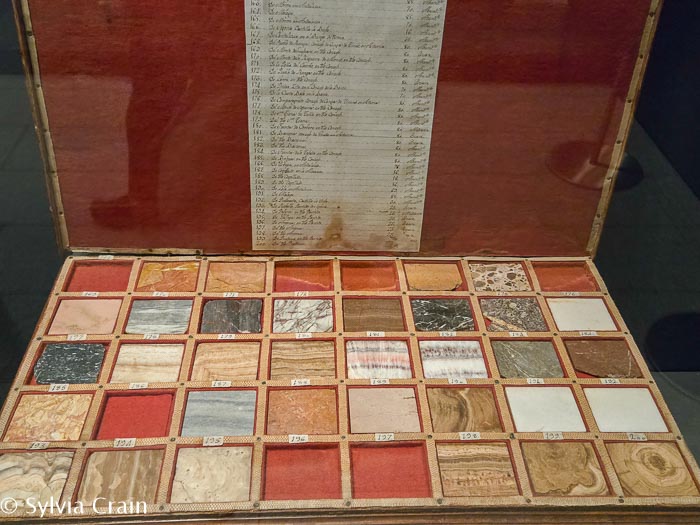
The brand new building where part of this collection resides is mostly underground (at least on 2 sides) on the Royal Palace grounds in Madrid. The Royal art collection is spread over 7 palaces around Spain, plus the Prado in Madrid. The exhibition at the Madrid palace is somewhat chronological by ruler starting in 1300 – 1400’s, into the Hapsburg rulers and then the Burbons. It provided an amazing historical overview as we explored the works.


The Prado
This is the premier art museum in Spain and the best known keeper of Spanish art. Interestingly, the collection, of course mostly created by Spanish royals, is focused on collecting everything of a specific painter as opposed to lots of different artists. So, if you want to know lots about, Titian, Rubens, Valazques, El Greco, … this is the place to go.
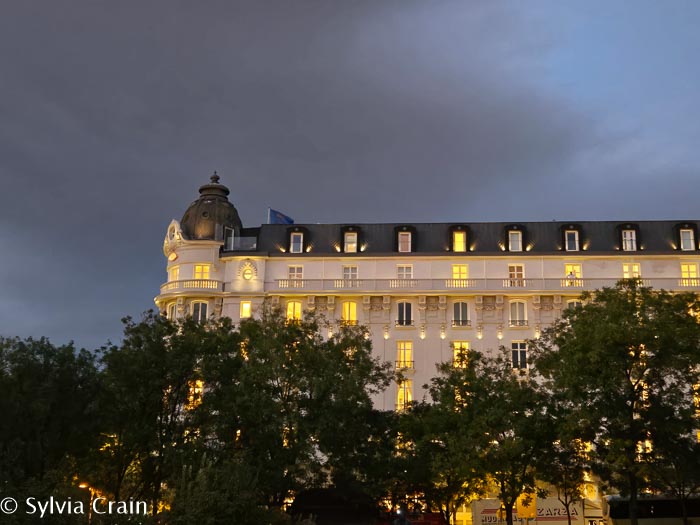
I didn’t know until I’d take a few pics, that photography is not allowed in this museum. So, very little to show you directly.
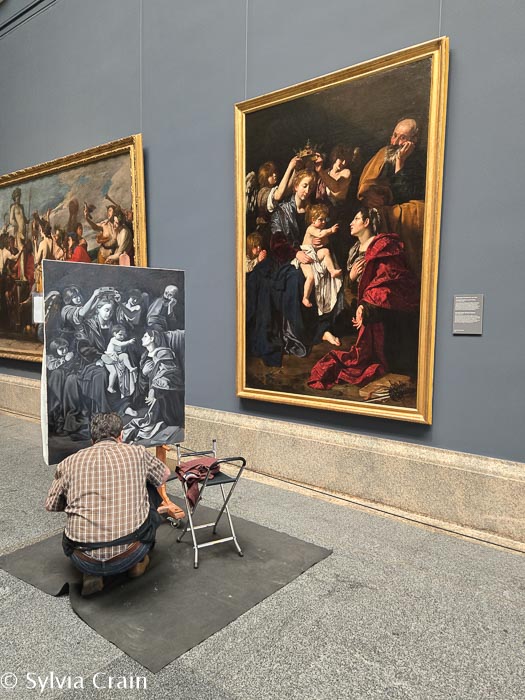
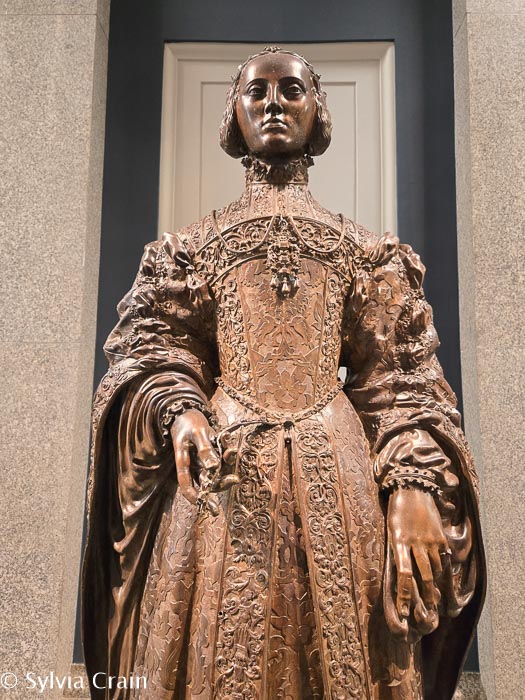
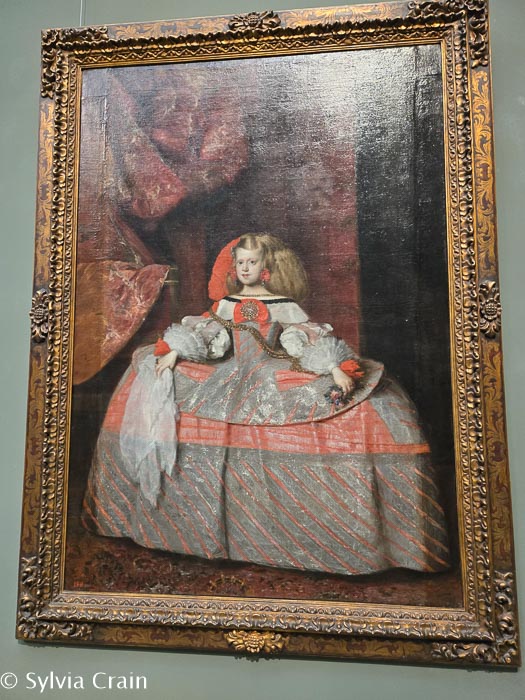
But, alas, I could not photograph further as I was told so. There were lots of dutch masters which I love and some of the most interesting religious art I’ve seen. Not my favorite genre in general, but with the Renaissance, it developed a much different and modern look than the stayed, violent style so prominent during the reign of Isabel and Ferdinand. But, one does need to learn her Greek and Roman mythology and bible stories to truly appreciate the work.
But, to the work that excited me the most. I do not understand why people are nor more familiar with Hieronymus Bosch, better known as El Bosco in Spain. He is of Dutch birth (1450 – 1516) to a family where is father was a painter as were his brothers. He painted mostly on oak panels and created several triptych’s. His most famous, The Garden of Earthly Delights (painted 1496-1505) was purchased by Phillip II of Spain in the late 1500’s along with several other El Bosco paintings.

The left panel is Jesus in the garden of Eden with Adam and Eve, the center panel is every bit of debauchery and carnal activity one could imagine and the third is hell. The tryptech closes and the outside is the glove in a transparent sphere. No people or animals. One can spend hours finding new things in this painting which is over 7 feet tall and nearly 13 feet wide.
El Bosco is considered to be the first surrealist (not hard to imagine)! The part that is hard to imagine is that his work was accepted in the 1500’s, and he was a successful painter. However, the Early Northern Renaissance in the Netherlands was leading painters into more natural representations in their imagery, along with the use of illusions and allegory in traditional religious scenes. El Bosco clearly took this to another level. After his death, other artists copied his style and thus, there is much controversy surrounding some works that had earlier been attributed to him that it turns out clearly are not. It is easy to see the influence of El Bosco in the works of Bruegel the Elder, Goya and the Surrealists of the 20th Century. El Bosco’s work is so very interesting.
This wraps up Spain. The next morning we flew out of Madrid for Toulon, France to visit boat friends. That is a different post to come!